Does a White Card Expire? State‑by‑State Rules for NSW, VIC, QLD, WA and SA
If you operate in or around construction in Australia, your white card is your entrance ticket. Labourer, pupil, designer, project manager, realty agent checking websites, also a movie staff on a structure collection, the exact same concern comes up over and over:
Does a white card in fact expire?
The brief solution is: the physical card does not have an expiry date, however your right to use it can efficiently lapse if you are out of building and construction work for too long, depending upon the state and the employer.
I will certainly walk through the state regulations for NSW, Victoria, Queensland, Western Australia and South Australia, then cover australian white card the edge instances you only learn about on real projects: lost cards, interstate job, online training, and when you truly should do a refresher also if the regulator does not force you.
First, what the white card actually is
The white card is the national construction induction card for Australia. It shows you have completed the device:
CPCWHS1001 Prepare to work safely in the building and construction industry
(previously CPCCOHS1001A and similar variations)Different regulators utilize slightly various names such as:
- general building induction training
- construction induction card
- construction white card
But they all factor back to the exact same nationwide proficiency, CPCWHS1001.
If you are new to construction, this is the minimal safety training you must complete prior to setting foot on a building and construction website where building work, as specified in WHS law, is occurring. It covers subjects such as:
- understanding common construction threats
- PPE on a building site
- basic building and construction emergency situation treatments
- manual handling in building
- plant and equipment security
- working at elevations essentials
- hazardous substances, consisting of silica dust and asbestos on building and construction sites
- electrical safety and security on building sites
- noise and warm tension on building and construction websites
Whether you are a labourer, in a building apprenticeship, a land surveyor, a job supervisor, an engineer, or perhaps doing website traffic control or dogging and setting up work with site, companies will anticipate you to hold a present white card.
In method, "existing" is where the complication starts.
State by‑state expiry regulations at a glance
Here is the fundamental setting in the major states that the majority of employees ask about.
-
New South Wales (NSW)
No published expiration, however if you have not executed construction help 2 years or more, SafeWork NSW requires you to complete the construction induction training once more before returning. -
Victoria (VIC)
WorkSafe Victoria does not place a formal expiration or 2‑year lack of exercise guideline on the building and construction induction card. The card is treated as recurring, although numerous employers use their own refresher course expectations. -
Queensland (QLD)
No published expiry on the card, yet WorkSafe Queensland states that if you have refrained building operate in the last 2 years, you have to redesign the basic building induction training before working again. -
Western Australia (WA)
The Building Induction Training Card (white card WA) does not technically run out. In accordance with national guidance, regulatory authorities and lots of companies expect you to renovate the CPCWHS1001 training course if you have been far from building help 2 years or more. -
South Australia (SA)
SafeWork SA recognises the nationwide white card. Like other WHS states, the card itself has actually no printed expiry, but if you have not been participated in building benefit 2 years or longer, you should expect to be asked to finish building induction training again.
Always examine the most recent guidance on the regulator's site, because phrasing around "has to" and "ought to" can move gradually. The useful truth nonetheless is fairly secure: if you stroll back on site after a number of years out of the market, someone is mosting likely to ask when you last did your white card.
Why regulatory authorities deal with "expiry" in a different way to most licences
People commonly compare white cards to construction licences in Australia such as high risk job licences, asbestos elimination permits or home builder permits issued under state structure legislations. Those credentials carry clear published expiry dates and revival processes.

The white card is different.
Your CPCWHS1001 is a professional competency, like any kind of other veterinarian device. Once you have a declaration of achievement, it does not lapse the means a permit does. That is why the card itself hardly ever reveals an expiry.
Work health and wellness regulatory authorities are balancing two points:
First, the need for a clear, simple entrance need for anyone beginning in building. CPCWHS1001 is implied to be that starting point.
Second, the truth that building risks progress. New materials, new plant, even more concentrate on psychosocial risks, better understanding of silica dust and asbestos risk, transforming expectations on WHS interaction. If someone did CPCCOHS1001A fifteen years earlier and has actually not been near a construction site considering that, they are not truly "inducted" by current standards.
So most states have actually arrived at a middle position: they do not publish an expiry, but they draw a line at around 2 years of non‑involvement in construction job. Past that factor, they want you to duplicate the course.
NSW: the 2‑year inactivity guideline in practice
The NSW white card is issued under the Job Health and Safety Guideline 2017 and overseen by SafeWork NSW.
Key points for NSW:
You can only get a NSW white card by finishing CPCWHS1001 through a SafeWork NSW approved RTO. Since 2019, that training needs to be done either face to face or via attached real‑time distribution, such as a real-time Zoom or Teams session, not as a fully self‑paced online white card course.
The card itself does not have an expiry date. However, SafeWork NSW's released position is that if you have not executed building and construction benefit 2 successive years or even more, you require to redesign the general building induction training before operating in construction again.
In the field, I see this guideline enforced most strictly on big primary specialist projects in Sydney, Parramatta, Campbelltown and comparable centers. Website managers will commonly request the date of training or the concern day when they validate your white card, specifically if the card appears like an older design.
If you lost your white card in NSW, you can generally request a substitute white card via the RTO that provided it, as long as they still run and still have your documents. If that stops working, you may need to contact SafeWork NSW with your details, or worst case, renovate the course.
Victoria: a long-term card with employer‑driven refreshers
The Victorian building and construction induction card, sometimes still called the "red card" out of behavior, is identified nationally as a white card.
WorkSafe Victoria does not apply an official 2‑year lapse policy. That frequently surprises workers getting here from NSW or Queensland. If you did a CPCWHS1001 course through a Victorian RTO years back, it is practically still valid.
On the ground though, specifically on tier‑one and tier‑two building jobs in Melbourne, Geelong or local centres, I see three points happening:
First, major specialists keep their very own WHS induction criteria. For instance, they might insist that anyone whose CPCWHS1001 training is white card course queensland more than, claim, 5 years old, finishes either a white card refresher session, an extended website induction, or both.
Second, safety groups take a look at the overall picture. If your white card is old, your building and construction experience is slim and you are strolling into a high‑risk atmosphere like a major architectural concrete job or a complicated refurbishment with asbestos risk, they will certainly often err on the side of brand-new training.
Third, more Victorians now work interstate. A Vic white card stands in NSW, QLD, WA and SA, however if you have stayed off website for numerous years, you can still strike the 2‑year inactivity trigger in those states.
If you remain in Victoria and wondering how long a white card course takes, anticipate roughly a complete day. A lot of companies schedule it as a 6 to 8 hour session, consisting of analysis. Expense differs, however, for a standard white card course in Melbourne or regional Victoria, fees of around $120 to $180 prevail, sometimes less for group white card training.
Queensland: rigorous enforcement of the 2‑year return‑to‑work rule
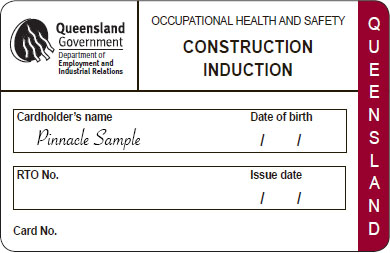
Queensland is extremely clear regarding lack of exercise. WorkSafe Queensland specifies that if you have not executed construction work in the coming before 2 years, you have to redesign the general construction induction training before returning to building and construction work.
This policy is used consistently across Brisbane, the Gold Coast, the Sunlight Coastline, Mackay and regional locations. When I have helped firms onboarding brand-new workers to building work in Queensland, the initial thing human resources does is ask for white card information, inspect the issue day and commonly confirm the card versus the RTO or the white card declaration of attainment.
Queensland still permits on the internet white card training through accepted RTOs, but it is not a casual click‑through training course. Companies should validate your identification, examine your USI (Distinct Trainee Identifier), and guarantee appropriate evaluation. A "white card online Queensland $20 in 20 minutes" kind offer will certainly not meet regulator expectations.
If you are assuming "can I do white card online" while based in one more state, beware. A QLD online white card is country wide identified, but some states, notably NSW, are delicate regarding just how and where the training was supplied. Always train with a reliable service provider and make certain they plainly state which regulatory authority they are approved by.
Western Australia: recognition, but see the gap in experience
In Western Australia, the white card is managed by WorkSafe WA. The card is formally called the Building Induction Educating Card.
WorkSafe WA verifies that the card does not run out. Nonetheless, they refer back to national construction induction guidance that states if a worker has not accomplished building work for two years or even more, they ought to be called for to redo the training.
The word "should" offers some professionals room to analyze, but in technique in Perth, on major projects and in mining‑related building job, security supervisors approach it significantly as a requirement. When I have actually seen employees attempt to mobilise to a remote job with an older card and little current experience, the safety team has actually usually insisted on a new CPCWHS1001 course.
Replacement white cards in WA can be gotten via the RTO that originally issued the card, or through the WorkSafe WA refines if the RTO is no longer operating. Maintain your USI and statement of achievement helpful, as those documents often make the distinction between a straightforward replacement and having to duplicate the course.
South Australia: white card assumptions on Adelaide projects
In South Australia, the white card is recognised under SafeWork SA. Training in Adelaide, Salisbury, Morphett Vale, Port Adelaide and other centres is provided by a mix of personal RTOs and group training organisations. You will commonly see offerings such as "white card course in Adelaide" or "white card training Salisbury" promoted for brand-new apprentices.
SA adheres to the exact same national design: the white card itself does not run out, however if you have not been working in building and construction for two or more years, you need to anticipate to total building and construction induction training once again prior to re‑entering the industry.
From experience with group white card training for business in Adelaide, the bigger industrial building contractors treat this very much as a requirement. Smaller contractors or subcontractors may be more unwinded, however that is altering as primary specialists and insurance providers elevate expectations along the whole subcontract chain.
If you have lost a South Australian white card, call the RTO that provided it first. Many deal white card replacement in SA for a small charge. If the RTO has Take a look at the site here actually shut or can not find your records, you can try SafeWork SA, but be prepared that you may need to remodel CPCWHS1001.
Does everybody on or around a site actually need a white card?
A typical point of confusion is who really requires a white card. There are borderline situations: shipment vehicle drivers, property representatives doing pre‑sale inspections, movie staffs on a construction‑style collection, going to designers, and customer representatives.
The broad policy throughout WHS states is that if you are executing building job, or you frequently need to get in building zones where building and construction tasks are occurring, you require a valid building induction card.
That generally includes:
- labourers and trades
- apprentices and students
- carpenters, electrical contractors, plumbings and painters
- site supervisors, task supervisors and engineers
- surveyors and some style professionals who attend website regularly
- traffic controllers and some distribution chauffeurs that routinely go into energetic building and construction areas
Occasional, one‑off visitors may be escorted under a site‑specific induction, but the moment you end up being a regular visibility, specifically if you are unescorted, a lot of companies will certainly insist on a white card.
I have actually seen a lot more sectors embrace the building standard as a baseline. For instance, some mining procedures approve the Australian white card as part of their induction pathway for service providers developing infrastructure on website. Also, some business home teams require a white card even for workplace fitout gos to, just to keep the conformity photo clean.
How online and face‑to‑face white card training courses differ
"Can I do white card online?" is among one of the most browsed concerns about white cards in Australia.
The response relies on the state regulatory authority and the training carrier's distribution model:
NSW needs face‑to‑face or real‑time digital distribution. Totally self‑paced, no‑interaction online white card courses are not accepted for a NSW white card.
QLD, WA, SA and VIC permit a mix of face‑to‑face and online, however RTOs need to fulfill rigorous problems: identification checks, monitored evaluation, correct student involvement and verified USIs.
Outside of the governing rules, the functional distinction comes down to high quality. Having actually attended both formats, real-time sessions are generally better for people who are completely brand-new to building and construction. You can ask questions regarding actual scenarios: how building website indicators are used, what a business white card program looks like for large organisations, what to do if you believe asbestos throughout a remodelling, or exactly how construction emergency procedures play out on a high‑rise.
Online shipment functions well for those that already have some direct exposure to sites and just need to tick an official demand before stepping into a new role.
Either way, ensure the CPCWHS1001 training course content is not simply reading slides. An appropriate course will consist of case studies, functional examples such as how to come close to dust‑heavy tasks, and customized discussions if your team is mostly apprentices, designers, or website managers.
When ought to you refresh your white card, also if nobody requires you?
There are strong situations for rejuvenating your knowledge even when the regulatory authority has not yet pulled you up.
Here prevail signs that a refresher course and even a full repeat of CPCWHS1001 is smart:
- You have actually been far from construction help around 2 years or even more
- You obtained your card under an older device code and a whole lot has actually transformed in your area (as an example, even more focus on silica dust or psychological wellness risks)
- You are moving from low‑risk construction assistance infiltrate high‑risk building or civil building
- You are stepping into a managerial or task monitoring duty and will be accountable for others' safety and security
- You feel out of your deepness when reviewing newer WHS needs or building permits in Australia, and you are guessing as opposed to knowing
Workers that treat the white card course as "one irritating training course I did at TAFE years back" have a tendency to be the ones caught out when something goes wrong. Those who utilize it as a normal security reset tend to make much better judgment phone calls, even on things as easy as operating in hot problems or controlling sound on a hectic site.
What to do if your white card details are missing out on or unclear
Two functional problems come up a lot: you have shed the physical card, or you do not remember who issued it.
Here is the normal process I stroll individuals through.
First, search for any kind of old documentation. Your statement of attainment for CPCWHS1001, an email receipt from the RTO, and even an old building and construction induction certification can make the search faster.
Second, use your USI. Because the USI system went live, most formal training is taped against your One-of-a-kind Student Identifier. If you develop or accessibility your USI account, you can often download and install a document of your completed training, consisting of CPCWHS1001. That document, plus image ID, is typically enough for an RTO to validate whether they can reissue a white card.
Third, contact the RTOs you are likely to have educated with, based on where you lived or operated at the time. For example, if you bear in mind doing a Hobart white card course early in your instruction, begin with RTOs that ran white card Hobart programs back then.
If none of that functions, do not think that a spoken "trust me, I did it" will pass inspection. Website managers are much less and much less going to take that threat. At that point, it can be faster and more secure to just look for white card training once again, specifically since one‑day white card programs in SA, VIC, QLD, WA or TAS are relatively affordable.
How white card suits a construction career path
For many people, the white card is the extremely very first step into the market. You do CPCWHS1001, start as a labourer, after that relocate into a trade, guidance, or a construction administration role.
It deserves seeing the white card in context of the wider course:
General building induction training (CPCWHS1001) proves you have the baseline recognizing to be allowed on site.
Site details inductions after that layer on the special threats of that project or facility. These are not a replacement for a white card. You need both.
Additional training for high‑risk tasks complies with. That could include dogging and rigging, working securely at elevations, restricted spaces, asbestos understanding, or role‑specific training for task supervisors and engineers.
Formal building licences in Australia, such as state builder permits or high risk job licences, sit most of all this, with their own experience and renewal requirements.
At each step, your preliminary white card knowledge is assumed, not duplicated completely. That is why regulatory authorities care about whether you have really been energetic in the market recently. A ten‑year‑old white card with no actual involvement since then does not lug much real‑world weight.
Key takeaways
If you function, or plan to work, on building and construction sites in NSW, Victoria, Queensland, WA or South Australia, treat your white card as both a certification and a living commitment.
The plastic card in your pocketbook might not have a published expiry date, however your competence to work safely is perishable. States like NSW and QLD formalise this with a two‑year inactivity regulation. Others rely much more greatly on company criteria, but actual clients and contractors are merging on the same expectation.
If you are not sure, check:
When you last did CPCWHS1001.
Exactly how continuously you have actually been operating in or around building since. Whether the role you are relocating into lugs higher dangers than what you have actually done before.If the responses make you be reluctant, it is typically worth the moment and modest cost of a fresh construction induction program. A strong white card course is just one of the least expensive threat controls you or your employer will ever before buy.